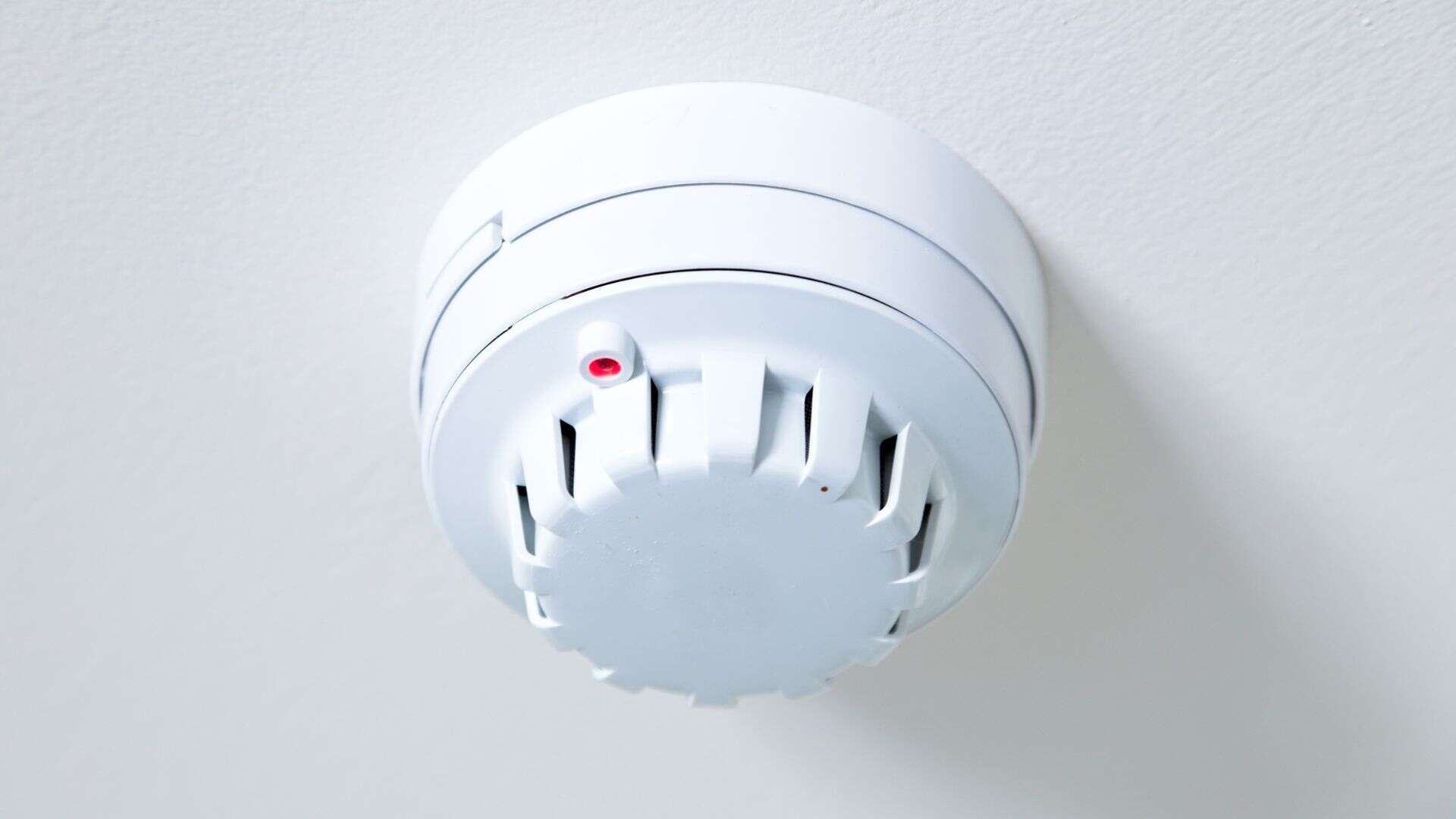
In today’s time, fire detectors are playing a vital role in saving lives.
Even though they may appear to be small devices, they are an essential part of fire safety systems.
That’s why it is important to use the right type of fire detector in your building. Whenever it comes to installing a fire detector in a building, people often get confused between smoke detectors and heat detectors.
They struggle to decide which one would be suitable for their needs. As a result, they often end up installing the wrong type of alarm system.
Although, Heat detectors and smoke detectors both play crucial roles in identifying fire risks, but they operate on entirely different principles.

So, it is very important to understand the difference between them. So, you can end up buying a new a right smoke detector according to your need.
A heat detector identifies fire by sensing temperature changes. Unlike smoke detectors, it doesn’t react to particles in the air. Instead, it activates when the surrounding temperature hits a specific level or increases sharply in a short time.
There are two main types:
Heat detectors are ideal in tough environments—think of commercial kitchens, manufacturing floors, garages, and boiler rooms. These areas often produce smoke or steam during regular operations, which would cause false alarms in a smoke-based system.
While they’re not designed to detect fire in its earliest stage, heat detectors provide dependable alerts in challenging conditions.
Smoke detectors identify airborne particles generated by fire. They are typically faster at detecting a fire in its early phase, especially when smoke appears before heat builds up.
There are two major types:
Some advanced devices combine both for broader detection.
Smoke detectors are well-suited to clean environments such as offices, residential buildings, hotel rooms, and data centres.
However, they require regular upkeep, as dust, humidity, or insects can trigger false alarms or interfere with their sensitivity.
The main difference lies in how they detect a fire. Smoke detectors sense combustion particles in the air, while heat detectors respond to high or rising temperatures.
Response Time: Smoke detectors usually detect fire faster than heat detectors.
Durability: Heat detectors are more resilient in dirty, smoky, or humid conditions.
Maintenance: Smoke detectors require more frequent cleaning and testing.
In short, smoke detectors provide early warning, while heat detectors offer reliable performance in tough environments.
| Industrial Kitchens | Heat Detector |
| Server or Data Rooms | Smoke Detector |
| Dusty Warehouses | Heat Detector |
| Office and Meeting Spaces | Smoke Detector |
| Underground Parking | Heat Detector |
| Hotels and Commercial Buildings | Combination of Both |
Placing the wrong detector in the wrong setting can lead to missed alarms or constant false alerts. Choosing based on the room’s conditions ensures better fire protection.
Yes, and in many environments, it’s highly recommended. Combining heat and smoke detectors provides layered protection. It reduces the risk of false alarms and enhances detection accuracy.
Many modern systems use multi-sensor detectors. These devices combine heat and smoke sensing in one unit and are designed to filter out environmental noise, offering smarter decision-making during fire incidents.
Such systems are increasingly popular in commercial buildings, hospitals, and facilities where safety and business continuity are critical.